
Primary wine aromas relate to the grape and alcoholic fermentation. Secondary aromas come from further winemaking choices, such as lees contact, malolactic conversion and oak. Tertiary aromas develop with maturation. These groups help you explore where the scents in your glass might come from.
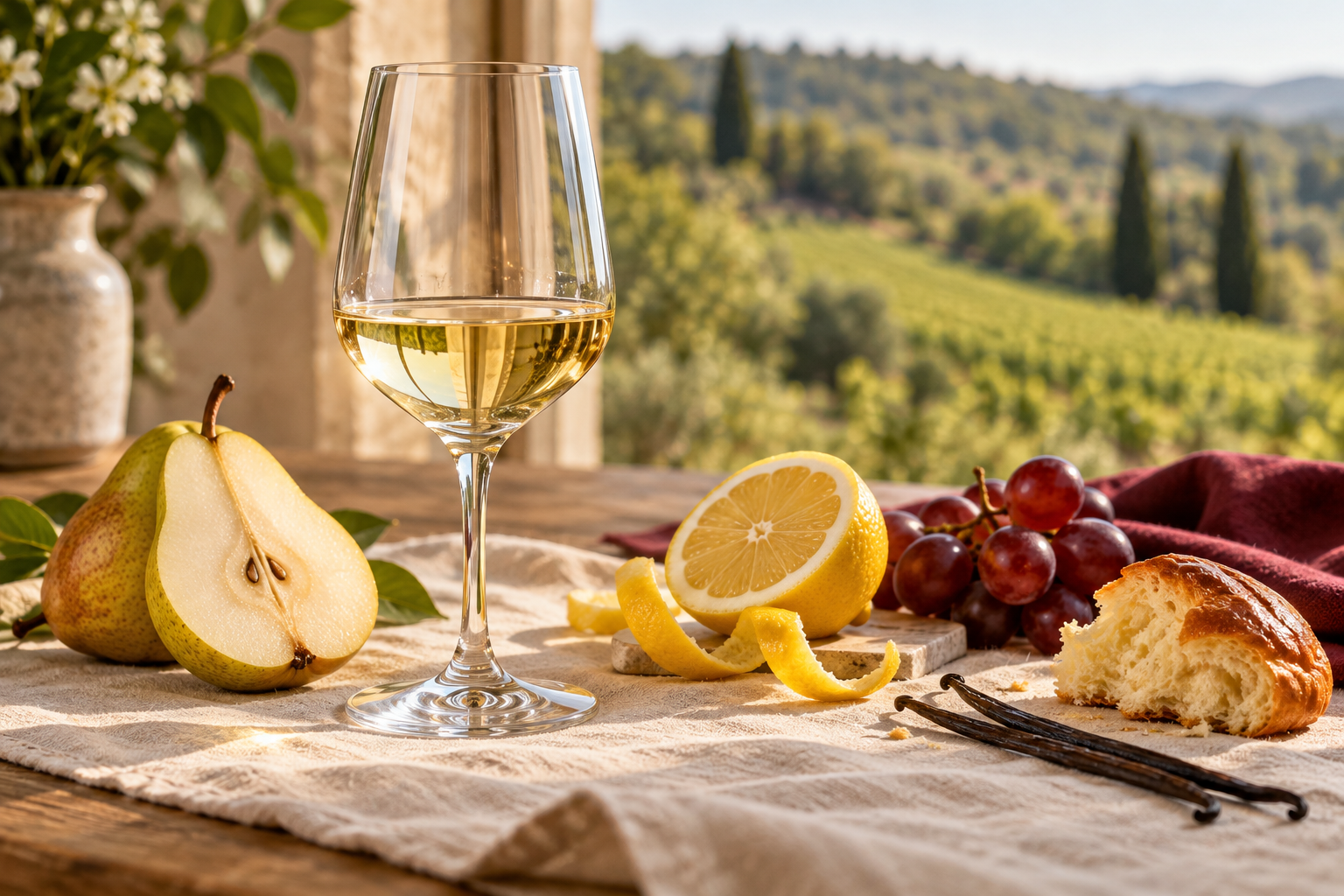
Primary aromas: fruit, flowers and fresh herbs
Think of the fruity, floral and herbal side of a wine. Citrus zest, ripe pear, red berries and a floral scent are examples. Some green and peppery impressions fit here too. Both the grape and alcoholic fermentation play a part.
Start with a family of scents. If you notice fruit, ask yourself what kind: citrus, soft stone fruit or red berries? Your kitchen is a lovely practice space. Smell a strip of citrus peel or a ripe pear and keep that memory for your next glass.
Secondary aromas: the winemaker’s choices
Further steps in winemaking can bring other scents. Contact with yeast lees can contribute bread-like aromas. Malolactic conversion can produce a buttery impression. Oak can add a hint of vanilla or a toasted character.
A white wine might smell of pear alongside butter: the fruit belongs to its primary side, while the buttery note can fit its secondary side. Write down what you notice first. Information from the winery can help you explore the possible origin afterwards.
What are tertiary aromas?
Maturation in a vessel or bottle can bring further development. Dried fruit, nuts and an earthy impression are examples. What appears depends on the wine and how it has matured.
You may recognise several groups together. A developed wine can still show fruit, with other layers alongside it. Smell again after a few minutes and see what catches your attention.
Examples to help you explore
| Group | Examples | A helpful question |
|---|---|---|
| Primary | Citrus zest, ripe pear, red berries, floral scents | Which fruit, flower or herb does this bring to mind? |
| Secondary | Fresh bread, a buttery note, vanilla, toasted scents | What might relate to lees, conversion or oak? |
| Tertiary | Dried fruit, nuts, earthy scents | What development can I notice alongside the fruit? |
A note with two layers
A note like this keeps the scents and your own impression together. The groups help organise your thoughts; your words make the wine memorable. When you return to it, you have a familiar place to start.
Try a little exercise
Pour a small tasting sample, smell it gently, then give the glass a careful swirl. Write down two or three scents you recognise. Compare your impressions with someone at the table. A friend’s “that reminds me of a peach” can give your nose a fresh idea.
Have water nearby and feel free to use a spittoon. A few thoughtful tasting sips can give you plenty to explore.
Our tasting notes guide helps you put those impressions into words. Use the printable tasting sheet to give your discoveries a home.